
Sustainable travel in North Wales: how to explore greener
- Jet R.
- 9 hours ago
- 9 min read

Travel is one of life's great pleasures. It is also, if we are being honest with ourselves, one of the areas where our environmental impact is most visible and most within our control.
The good news is that choosing to travel more sustainably does not mean choosing to travel less well. In North Wales, one of the most naturally extraordinary destinations in the United Kingdom, the greenest ways to explore are frequently also the most rewarding. The train through the Conwy Valley. The bicycle along the coastal path. The long walk into the mountains rather than the short drive to the car park.
This is a guide to exploring North Wales with a lighter footprint, and to discovering, in the process, that the slower, greener approach tends to reveal the very best of what this remarkable corner of Britain has to offer.
Why North Wales lends itself to sustainable travel
There is something almost circular about sustainable travel in North Wales. The landscapes that make the region worth visiting, the mountains, the coastline, the ancient woodland, the glacial lakes, are precisely the things that benefit most from a lighter approach to tourism.
North Wales has also invested meaningfully in sustainable infrastructure over the past decade. The rail network connecting the North Wales coast is excellent. The National Cycle Network has extensive provision across the region. The number of accommodation providers making genuine commitments to environmental responsibility is growing steadily.
And there is a deeper cultural dimension. Wales has a long and living relationship with its natural environment, a relationship expressed in its language, its literature, its land management practices, and its approach to conservation. Travelling sustainably in North Wales is not simply a personal choice; it is a way of engaging with the region on its own terms.
Getting there greener

By rail, the greenest long-distance option
For visitors travelling to Llandudno from elsewhere in the UK, the train is the single most impactful sustainable choice available. Rail travel produces, on average, approximately six times less carbon per passenger kilometre than the equivalent car journey, a difference that is meaningful regardless of how you define your sustainability goals.
Llandudno is well connected by rail. The North Wales Coast Line runs directly from Chester, connecting to the national network with straightforward services from London Euston, Manchester Piccadilly, Birmingham New Street, and beyond. Llandudno Junction, a short distance from the town, is the main interchange, with a connecting service into Llandudno itself.
For guests staying at James Court Apartments, the excellent public transport links make the car-free arrival genuinely practical. The town centre, the beach, and the Great Orme are all within comfortable walking distance of the station, and the wider region is readily accessible by the rail connections described below.
By coach
National Express and Megabus operate services to Llandudno and the wider North Wales area from several major cities. Coach travel is the lowest-carbon motorised option for long-distance travel in the UK and is often significantly more affordable than the equivalent rail fare, making it an option worth considering for cost-conscious as well as environmentally-conscious travellers.
By electric vehicle
For those travelling by car, whether because rail isn't practical for their journey or because they're bringing luggage, equipment, or young children, an electric vehicle is the meaningful upgrade. The UK's charging network has expanded considerably in recent years, and the route to North Wales from most parts of England is well-served by rapid chargers along the A55 and the wider motorway network.
James Court provides two EV charging points on site, which removes one of the key practical anxieties of EV travel: the knowledge that you will return each evening to a fully charged vehicle, ready for the following day's exploration, without needing to locate a public charger in an unfamiliar town.
Getting around greener once you're there
Cycling - the finest way to see North Wales
There is an argument, a persuasive one, that the bicycle is the ideal vehicle for North Wales. It is quiet, emissions-free, compatible with the kind of unhurried exploration the region rewards, and fast enough to cover genuine distances whilst remaining slow enough to actually notice what you're passing.
The National Cycle Network has extensive provision across North Wales. The North Wales Coastal Route (NCN Route 5) runs along the coast from Chester through Llandudno, Conwy, and on towards Bangor and Holyhead, a predominantly flat route with sea views for much of its length, accessible to most fitness levels. The Conwy Valley Cycling Route heads inland from Conwy through one of the most beautiful river valleys in Wales towards Betws-y-Coed, with the Snowdonia mountains rising on either side.
For guests at James Court, the indoor bicycle storage racks make cycling a genuinely practical holiday option rather than a logistical challenge. Bring your own bikes, store them securely between rides, and avoid the accumulated costs of a hire car entirely. The racks are sheltered, which matters in October in North Wales, and their presence signals a genuine commitment to supporting guests who choose to travel under their own power.
For those who prefer to hire rather than transport, there are cycle hire options in Llandudno, Conwy, and Betws-y-Coed; ask the James Court team for current recommendations.
The train within North Wales

The rail network within North Wales is one of the region's underappreciated assets for sustainable travel.
The Conwy Valley Line from Llandudno Junction to Betws-y-Coed (and on to Blaenau Ffestiniog) is one of the most scenic railway journeys in Wales, 27 miles of river valley, ancient woodland, and mountain scenery that is, frankly, best enjoyed from a train window rather than a car windscreen. It accesses the heart of Snowdonia without the car park negotiation that peak-season driving in the national park can entail.
The North Wales Coast Line westward from Llandudno Junction connects to Bangor, from which buses run to Caernarfon, Beaumaris, and the Anglesey ferry. Combined with a bus pass, the rail network makes a genuinely car-free week in North Wales achievable for most itineraries.
The Ffestiniog and Welsh Highland Railways, narrow-gauge heritage lines running from Porthmadog through Snowdonia to Caernarfon, are not just a sustainable transport option but a destination experience in their own right: steam-hauled, extraordinarily scenic, and one of the finest ways to experience the national park.
Walking
It bears saying plainly: walking is the most sustainable way to explore, and North Wales is one of the finest walking destinations in the United Kingdom.
Llandudno itself is an excellent walking base. The Great Orme circuit, the West Shore, the town centre and the promenade are all reachable on foot from James Court and Curzon Villa. The Great Orme Marine Drive circuit of approximately 5 miles makes a satisfying half-day walk with consistently excellent coastal views.
Further afield, the Snowdonia National Park has a network of signed footpaths ranging from gentle valley walks to serious mountain routes. The Conwy Valley Way long-distance path traces the river from Conwy to its source in the mountains. The Isle of Anglesey Coastal Path extends for 125 miles around the entire island for those with the time and ambition to walk it in sections.
Walking costs nothing, produces nothing harmful, and puts you in direct, unhurried contact with the landscapes that make North Wales exceptional. There is no more sustainable form of tourism, and very few more rewarding ones.
Eating and shopping sustainably in North Wales
Welsh produce, provenance on a plate
One of the most straightforward sustainable choices available to visitors is to eat Welsh. North Wales has an exceptional larder, the lamb from the mountain farms, the seafood from the Irish Sea, the cheese from the farms of Anglesey and the Llŷn Peninsula, the soft fruit and vegetables from the market gardens of the Conwy Valley, and a growing number of restaurants, cafés, and delis that take its provenance seriously.
Eating local food has a direct sustainability benefit: shorter supply chains, lower food miles, and support for the farming and fishing communities whose land management practices shape the very landscapes visitors come to experience. It is also, in almost every case, simply better food.
For guests self-catering at James Court or Curzon Villa, the local delis and independent food shops of Llandudno and Conwy are the natural starting point. A hamper assembled from genuinely local ingredients- Welsh lamb, Harlech cheese, freshly smoked sea trout, bara brith- is not just sustainable but a genuinely superior alternative to the supermarket equivalent, and a direct investment in the communities that maintain the region.
Independent and local businesses
Tourism spending is most sustainably directed towards locally owned businesses rather than national chains. In Llandudno, the independent shops on the backstreets behind the main promenade, the family-run restaurants, the local cafés and galleries, all of these represent economic activity that stays within the local community rather than being extracted to a head office elsewhere.
The Oriel Mostyn Gallery on Vaughan Street, Llandudno Museum, and the independent bookshops and gift shops of the town centre all represent the kind of locally distinctive cultural economy that sustainable tourism actively supports.
Sustainable outdoor activity in North Wales
Leave No Trace in Snowdonia
Snowdonia National Park receives millions of visitors each year, and the pressure on its most popular paths, parking areas, and summits is real and measurable. Choosing sustainable practices in the national park is not simply an ethical nicety; it is a practical contribution to the preservation of landscapes that genuinely need it.
The Leave No Trace principles apply throughout:
Stay on marked paths where they exist; the erosion caused by path-widening on popular Snowdonia routes is one of the park's most significant management challenges.
Take all litter home, including biodegradable items such as fruit peel, which decomposes more slowly at altitude than most people assume.
Use the toilet facilities at trailheads; human waste on popular mountain routes is a growing problem that a small behavioural adjustment on the part of every visitor can substantially reduce.
Park at designated car parks; driving to alternative roadside spots to avoid fees or queues causes disproportionate damage to verges and access routes.
Wildlife consideration
North Wales is exceptionally rich in wildlife, and responsible wildlife watching is one of the most rewarding aspects of a sustainable visit. The red kites that were reintroduced to Wales in the 1980s and have since spread across the region are now a common and spectacular sight, visible from the Conwy Valley route and throughout the upland areas. Ospreys nest at Glaslyn near Porthmadog. The Great Orme is home to a significant population of guillemots, razorbills, and fulmars on its limestone cliffs.
Maintain a respectful distance, follow any seasonal guidance on restricted areas, and treat wildlife encounters as the privilege they are.
How Llandudno Great Escapes supports sustainable travel
Choosing where to stay is one of the most impactful sustainability decisions a traveller makes, and it is one we take seriously.
At James Court Apartments, we have made practical investments in the infrastructure of sustainable travel:

EV charging points, giving electric vehicle drivers a reliable, convenient overnight charge without needing to use public charging infrastructure.
Indoor bicycle storage racks, secure, sheltered, and purpose-built for guests who choose to bring their own bikes rather than hire a car.
Excellent public transport links: James Court's central Llandudno location means the station, the bus stops, and everything the town offers are within easy walking distance.
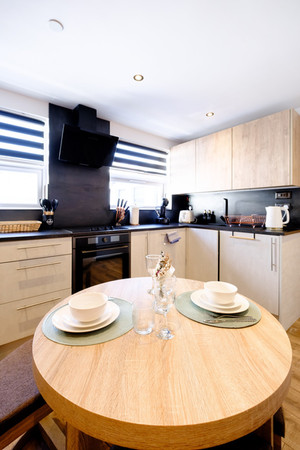
Self-catering facilities, reducing the food miles and packaging associated with restaurant and hotel dining by enabling guests to shop locally and cook for themselves.
At Curzon Villa, the private detached setting and the ability to accommodate up to 20 guests under one roof means that the per-person environmental footprint of a large group stay is considerably lower than the equivalent group distributed across multiple hotel rooms or separate properties.
We are committed to continuing to improve our sustainability credentials, and we welcome feedback from guests on how we can do better.
A note on carbon offsetting
Carbon offsetting, the practice of compensating for travel emissions by funding carbon reduction or removal projects elsewhere, is a useful supplement to genuinely reduced emissions, but not a substitute for them. The most impactful choices remain the primary ones: choosing the train over the car, the bicycle over the hire car, and the locally sourced meal over the imported equivalent.
If you choose to offset the emissions from your journey to North Wales, look for projects certified by the Gold Standard or Verra Verified Carbon Standard, both of which apply rigorous independent verification to the carbon claims of the projects they certify. Be cautious of cheaper, unverified offset schemes, whose carbon claims frequently do not withstand scrutiny.
Greener travel, better travel
There is a particular quality to a holiday in which the choices feel good as well as the experiences. The morning train along the North Wales coast, the afternoon on a bicycle in the Conwy Valley, the evening meal cooked from produce bought at a local deli, these are not sacrifices in the name of sustainability. They are the kinds of experiences that make a holiday memorable rather than merely pleasant.
North Wales is a place that rewards this approach. Its landscapes are best understood at walking pace. Its food is best when it is local. Its railway lines go through some of the finest scenery in Britain. The greenest way to explore it is very often the most beautiful way too.
We look forward to welcoming you.
Stay sustainably with Llandudno Great Escapes
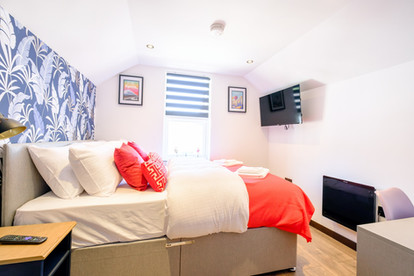
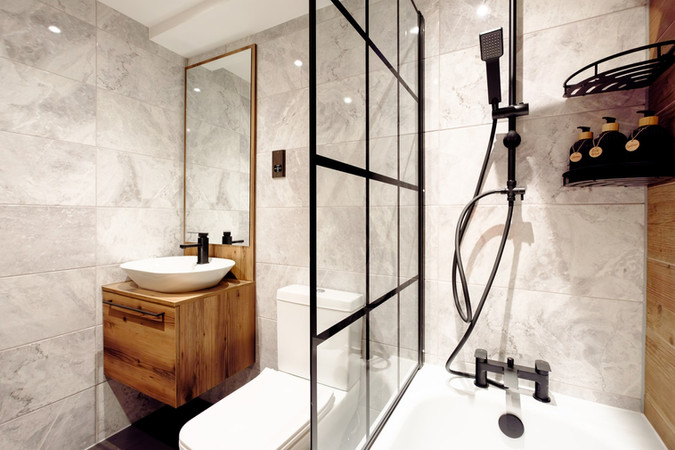
James Court Apartments — self-catering one and two-bedroom apartments in central Llandudno, with EV charging, indoor bike storage, excellent public transport links, free parking, and the beach just 0.3 miles from the door.




Curzon Villa — a luxury 10-bedroom detached villa in Llandudno sleeping up to 20 guests, with 8 en-suite bathrooms, a hot tub, and a games room — a sustainably efficient choice for large groups who would otherwise require multiple properties.







Exploring North Wales responsibly? Browse our full range of local guides, travel tips, and activity ideas on the Llandudno Great Escapes blog.